Training, Dojo, Practice, Solo Training, Family, Activity
A Guide to Setting up a Home Dojo
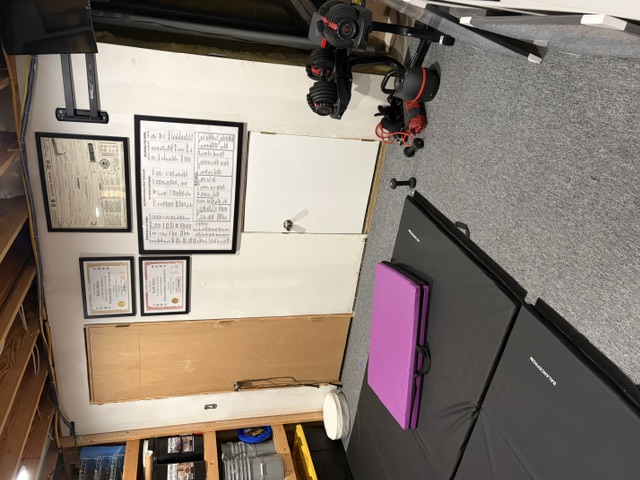
A practical home dojo setup guide for families who train smarter between classes
Your child comes home from a class at The Dojo, ready to practice what they just learned, and you want to encourage them, but you are not sure where to begin.
At The Dojo, we have spent over 20 years helping students and families in Mason build meaningful martial arts training habits that extend well beyond the mat. This guide walks you through building a functional home Budo Taijutsu practice space on any budget, so your home dojo becomes the natural extension of what we teach in person.
Start With Your Space Before You Buy Anything
The most common mistake in home dojo setup is purchasing gear before identifying a realistic practice area. Budo Taijutsu does not require a large open floor, but it does require enough room to move through basic ukemi (falling and rolling) without hitting furniture or walls.
A cleared area roughly ten feet by ten feet is a workable starting point for solo movement, basic strikes, and stationary technique study. Measure what you actually have before spending anything.
Basement or garage floors: Flat, hard surfaces that accept foam mats well and can be cleared for dedicated training sessions. Living room or bonus room: Furniture pushed aside creates a surprisingly functional space for younger students working on footwork and posture drills.
Outdoor flat surfaces: A level backyard area works well in warmer months for solo movement practice, especially when paired with video review.
Choosing the Right Mats for Traditional Martial Arts Training
Not every foam mat is built for the demands of Budo Taijutsu home practice. Traditional ukemi involves controlled contact with the ground in a rolling manner, so your surface needs to cushion impact without making footwork feel unstable. Interlocking EVA foam puzzle mats in the one-inch thickness range are a popular, budget-friendly option that lie flat and store easily. If your budget allows, a tatami-style mat offers a more traditional surface and holds up better over time with consistent martial arts training at home.
You get what you pay for
Option 1 – Budget EVA foam puzzle mats: Affordable, widely available, and easy to reconfigure as your home dojo space evolves.
Option 2 – Tatami-style mats: More durable and closer to the feel of a traditional dojo floor, making them a worthwhile investment for serious home practitioners.
Yoga mats: Useful for stretching and stationary practice but provide insufficient cushioning for ukemi work.
Mount a Screen and Make Your Home Dojo a Real Training Environment
Once your floor is covered, the single biggest upgrade you can make to a home martial arts practice space is a dedicated video-guided training screen. This is where The Dojo's Teachable Online Learning Center becomes the centerpiece of your setup. Wall-mounting a television or monitor at eye level transforms passive video watching into a structured, active training session. Even a basic flat-screen on a low-profile bracket does the job effectively.
Wall-mounted TV or monitor: Position it at eye level from seiza (formal kneeling posture) for easy viewing during technique study and review.
Tablet stand at floor level: A flexible, lower-cost alternative when wall mounting is not practical in your space.
Bluetooth speaker: Instructional audio is far easier to follow when it is not competing with ambient room noise from a small device speaker.
What to Actually Practice Between Classes
A home dojo setup works best when your practice reinforces what you are learning in class rather than trying to replace the instructor relationship or introduce new material without guidance.
Students who access our Teachable platform can return to instructional content as many times as they need, something a single weekly class cannot replicate on its own.
Use home sessions to repeat foundational movement patterns, review recent technique sequences, and build the physical habits that make in-person Budo Taijutsu training more productive.
Solo movement drills: Footwork patterns, kamae (posture and stance) practice, and basic striking mechanics to reinforce body memory without a partner.
Video review sessions: Watching technique demonstrations before practicing them helps students arrive at class with sharper questions and faster comprehension.
Family partner drills: Even non-enrolled family members can participate in basic cooperative exercises, reflecting the family-oriented training philosophy we emphasize at The Dojo.
Building a Home Practice Habit That Lasts into the School Year
Summer gives families open, unstructured time that disappears quickly once September arrives. The home dojo you set up now, even a modest one, becomes a tool for maintaining focus, physical engagement, and routine throughout the school year.
Children who practice movement and mindfulness consistently at home tend to carry those habits into their academic lives in visible ways. The mental training and character development components of Budo Taijutsu do not stop when class ends, and a home environment that supports practice reinforces those values every day.
The goal is not perfection. Consistency and a simple, well-organized home space make regular practice far easier for the whole family.
We are proud to support local families in building a home martial arts training life that connects directly to what we teach in our community.
If you want to join us in dojo classes, contact us at thedojocincinnati@gmail.com or call 513-770-0834.
Here is the link to the Teachable Online Learning Center. Homepage | The Dojo
At only $9.95 per month, it costs less than one-tenth the price of many other online learning platforms, while offering more comprehensive, detailed instruction.
The best of training to you and your family.
Larning Budo is an amazing privilege and honor.
— Todd Ryotoshi Norcross
Dojo Cho / Shihan
Enjoyed this article? Share it with your training partners.
You might also like



Ready to Start Your Martial Arts Journey?
Join us at The Dojo and experience the benefits of authentic Budo Taijutsu training firsthand.
Claim Your Free Trial